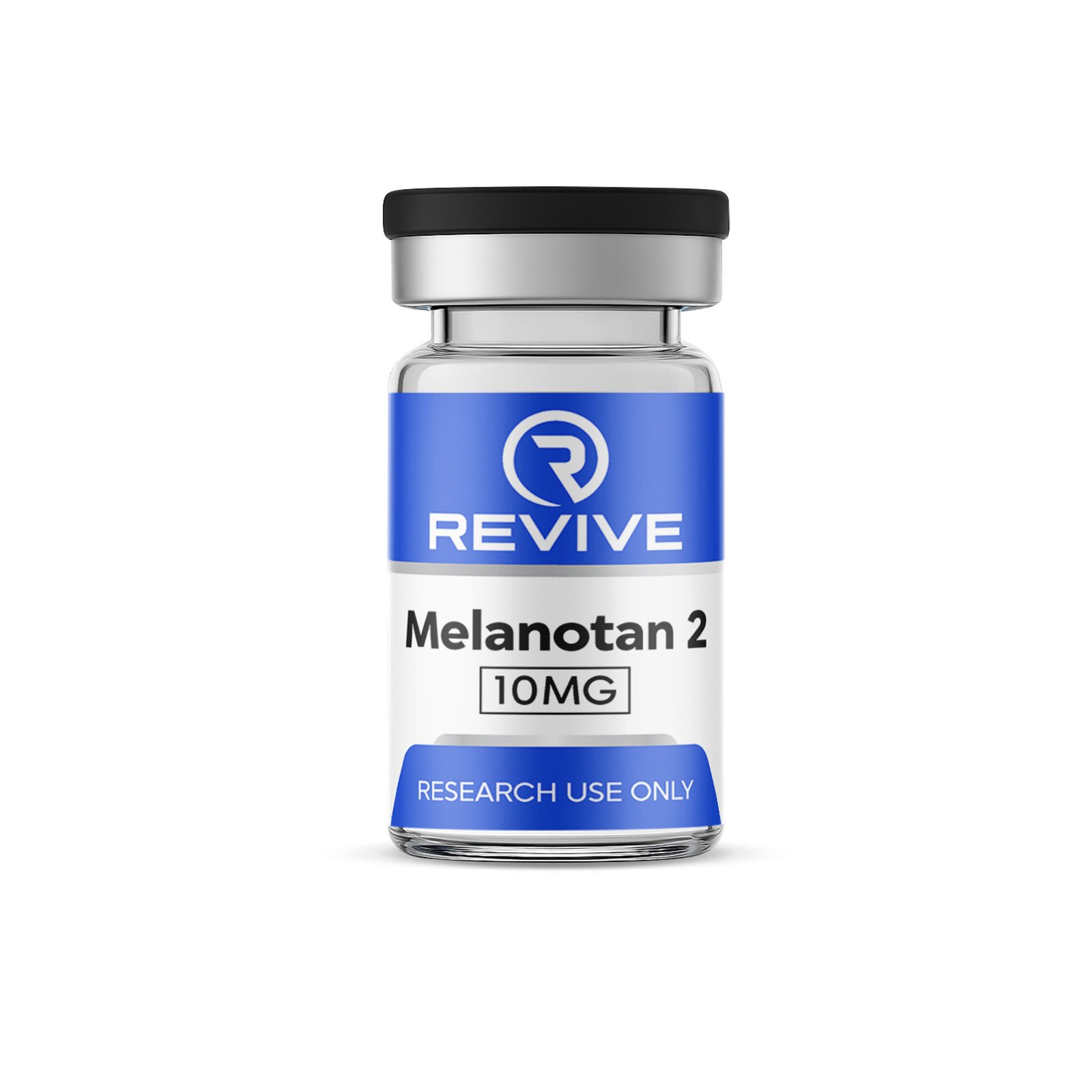
Melanotan 2 (MT-2) – 10 MG
Melanotan 2 (MT-2) is a synthetic peptide derived from the human pro-opiomelanocortin (POMC) precursor, structurally distinct from Melanotan I (MT-I). Originally explored for its melanocyte-stimulating effects, MT-2 research has primarily focused on its potential pharmacological interactions in animal and in vitro studies. This peptide is intended exclusively for research purposes and is not approved for therapeutic or cosmetic applications.
Research Context
MT-2 was first synthesized in the late 1990s and has since been investigated for its role in pigmentation modulation, behavioral responses, and potential neuroendocrine effects. Unlike MT-I, which primarily binds to melanocortin-1 receptors (MC1R) to induce tanning, MT-2 exhibits broader receptor affinity, including interactions with MC4R and MC5R, among others. Early studies in rodent models highlighted its ability to induce skin darkening, but these effects were not explored for human cosmetic applications in peer-reviewed research.
Research Overview
Research on MT-2 has primarily centered on its neurochemical and physiological mechanisms, particularly in studies involving animal models. Key findings include:
- Melanocyte-stimulating effects in pigmentation studies, though not validated for human use.
- Potential modulation of mood-related behaviors in preclinical studies.
- Investigations into its role in energy homeostasis and metabolic regulation in rodent experiments.
While MT-2’s interactions with MC receptors have been extensively characterized, its safety profile in non-human systems remains subject to ongoing experimental analysis. This peptide is not approved for therapeutic, cosmetic, or veterinary use and is provided solely for academic or exploratory research purposes.
Key Research Focus Areas
- Receptor Affinity Studies: MT-2’s binding interactions with melanocortin receptors (MC1R, MC4R, MC5R) have been mapped through ligand-binding assays and functional assays in cell lines. Research has shown that MT-2 exhibits a higher affinity for MC5R compared to MT-I, potentially influencing skin and hair pigmentation mechanisms.
- Behavioral and Neuroendocrine Effects: Preclinical investigations have explored MT-2’s role in modulating behaviors associated with melanocortin signaling, such as reward responses and circadian rhythm regulation, though no human studies are documented.
- Metabolic and Endocrine Analysis: Studies in rodents have examined MT-2’s impact on food intake, glucose metabolism, and hormone secretion (e.g., leptin, corticotropin-releasing factor). These findings are relevant to broader research into peptide-based regulatory mechanisms but do not translate to human physiology without rigorous clinical validation.
- Toxicology and Pharmacokinetics: Research has characterized MT-2’s metabolic stability, clearance rates, and potential off-target effects in animal models, emphasizing the need for careful dose optimization in experimental settings.
Safety and Compliance
Due to its potential systemic effects and lack of human safety data, MT-2 must be handled with extreme caution. Research protocols must adhere to institutional review board (IRB) guidelines, regulatory frameworks (e.g., Good Laboratory Practice), and ethical standards governing peptide-based studies. This product is intended exclusively for academic research facilities or authorized laboratories conducting peer-reviewed investigations.
For research use only. Not for human or animal consumption.
| Weight | 0.0188 lbs |
|---|






Reviews
There are no reviews yet.