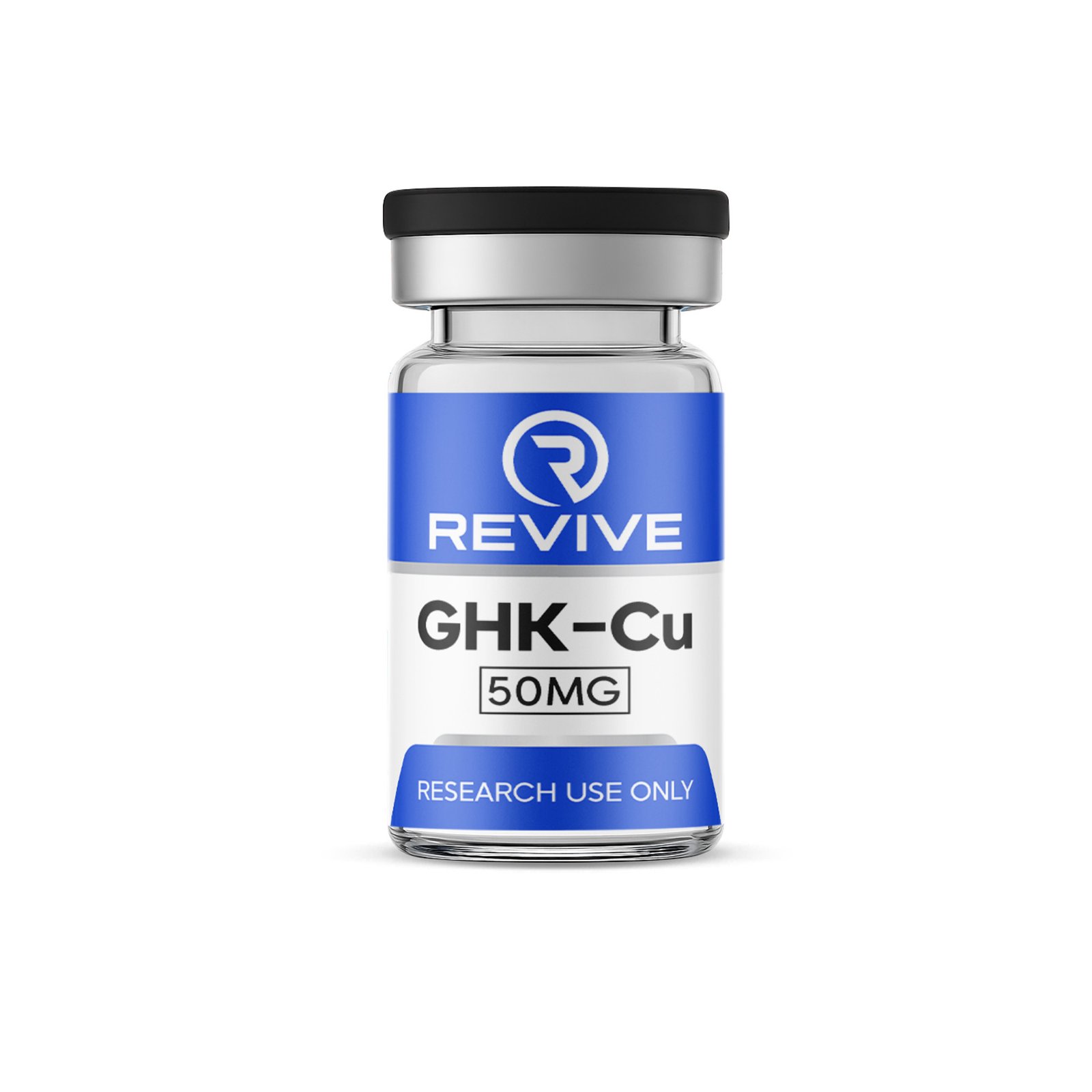
GHK-Cu

Categories:

GHK-Cu is a research-use-only peptide composed of the tripeptide glycyl-L-histidyl-L-lysine coordinated with copper (Cu). This peptide has been investigated for its potential biological roles in cell signaling, protein trafficking, and wound healing mechanisms under laboratory conditions. For research use only.

Price range: $49.00 through $79.00

⚠️ RESEARCH USE ONLY

This product is for R&D purposes only and is not approved for human or veterinary use.


GHK-Cu

GHK-Cu (Glycyl-L-histidyl-L-lysine-copper) is a naturally occurring peptide complex comprising the tripeptide glycyl-L-histidyl-L-lysine (GHK) bound to a copper ion. This research-use-only peptide has been extensively studied in biological and biochemical research for its potential roles in cellular signaling, wound healing, and tissue repair. GHK-Cu is an important tool for examining mechanisms of peptide-mediated cellular interactions under controlled laboratory conditions.

Research Context

GHK-Cu is one of the most thoroughly characterized peptide-copper complexes in scientific literature. Its discovery originated in studies examining the role of copper in wound healing and extracellular matrix remodeling. The peptide GHK alone has been investigated for its bioactivity, but the addition of copper significantly enhances its stability and biological activity in vitro and in vivo models. Due to its specific interactions with cellular receptors, GHK-Cu has become a key research molecule in studies of cell signaling, protein interactions, and regenerative processes.

Research Overview

Research involving GHK-Cu has primarily focused on its mechanisms of action at the molecular level, including its binding affinity to specific cellular receptors, effects on extracellular matrix deposition, and involvement in inflammatory responses. The peptide-copper complex is notable for its capacity to modulate cellular behavior under conditions mimicking physiological and pathological environments. Because GHK-Cu is not naturally found in high concentrations in biological samples, its use in research provides an isolated means to investigate peptide-copper interactions without confounding variables.

Key Research Focus Areas

  • Cellular Signaling: Examination of GHK-Cu’s interactions with growth factor receptors and its role in mediating cellular responses to extracellular stimuli.
  • Extracellular Matrix Remodeling: Investigations into how GHK-Cu influences collagen and elastin deposition, particularly in wound healing and tissue repair contexts.
  • Copper Biology: Studies on copper’s role in peptide stability, bioavailability, and its effects on copper-dependent enzymatic activity within cells.
  • Inflammatory Responses: Analysis of GHK-Cu’s potential modulatory effects on immune cell behavior and cytokine production in experimental models.
  • Biomolecular Interactions: Detailed examination of GHK-Cu’s binding kinetics to protein targets, such as integrins or scavenger receptors, and its implications for peptide-based drug design.

Due to its unique chemical and biological properties, GHK-Cu serves as a valuable research tool for studying peptide-copper interactions under highly controlled conditions. Its use in research is critical for advancing our understanding of cellular mechanisms underlying tissue repair, inflammation, and regenerative processes.

Important Compliance Notice

GHK-Cu is intended solely for research purposes and is not approved for human or animal consumption. This material must be handled according to established laboratory protocols, including proper storage, documentation, and disposal procedures. The following statements are mandatory for all users: “For research use only. Not for human or animal consumption. Keep out of reach of children and unauthorized personnel. Proper documentation must be maintained for all research involving GHK-Cu.”

Size

100MG, 50MG

Reviews

There are no reviews yet.

Be the first to review “GHK-Cu”

Your email address will not be published. Required fields are marked *


GHK-Cu

GHK-Cu (Glycyl-L-histidyl-L-lysine-copper) is a naturally occurring peptide complex comprising the tripeptide glycyl-L-histidyl-L-lysine (GHK) bound to a copper ion. This research-use-only peptide has been extensively studied in biological and biochemical research for its potential roles in cellular signaling, wound healing, and tissue repair. GHK-Cu is an important tool for examining mechanisms of peptide-mediated cellular interactions under controlled laboratory conditions.

Research Context

GHK-Cu is one of the most thoroughly characterized peptide-copper complexes in scientific literature. Its discovery originated in studies examining the role of copper in wound healing and extracellular matrix remodeling. The peptide GHK alone has been investigated for its bioactivity, but the addition of copper significantly enhances its stability and biological activity in vitro and in vivo models. Due to its specific interactions with cellular receptors, GHK-Cu has become a key research molecule in studies of cell signaling, protein interactions, and regenerative processes.

Research Overview

Research involving GHK-Cu has primarily focused on its mechanisms of action at the molecular level, including its binding affinity to specific cellular receptors, effects on extracellular matrix deposition, and involvement in inflammatory responses. The peptide-copper complex is notable for its capacity to modulate cellular behavior under conditions mimicking physiological and pathological environments. Because GHK-Cu is not naturally found in high concentrations in biological samples, its use in research provides an isolated means to investigate peptide-copper interactions without confounding variables.

Key Research Focus Areas

  • Cellular Signaling: Examination of GHK-Cu’s interactions with growth factor receptors and its role in mediating cellular responses to extracellular stimuli.
  • Extracellular Matrix Remodeling: Investigations into how GHK-Cu influences collagen and elastin deposition, particularly in wound healing and tissue repair contexts.
  • Copper Biology: Studies on copper’s role in peptide stability, bioavailability, and its effects on copper-dependent enzymatic activity within cells.
  • Inflammatory Responses: Analysis of GHK-Cu’s potential modulatory effects on immune cell behavior and cytokine production in experimental models.
  • Biomolecular Interactions: Detailed examination of GHK-Cu’s binding kinetics to protein targets, such as integrins or scavenger receptors, and its implications for peptide-based drug design.

Due to its unique chemical and biological properties, GHK-Cu serves as a valuable research tool for studying peptide-copper interactions under highly controlled conditions. Its use in research is critical for advancing our understanding of cellular mechanisms underlying tissue repair, inflammation, and regenerative processes.

Important Compliance Notice

GHK-Cu is intended solely for research purposes and is not approved for human or animal consumption. This material must be handled according to established laboratory protocols, including proper storage, documentation, and disposal procedures. The following statements are mandatory for all users: “For research use only. Not for human or animal consumption. Keep out of reach of children and unauthorized personnel. Proper documentation must be maintained for all research involving GHK-Cu.”

Age Verification!

*By continuing, you confirm eligibility and legal compliance.